
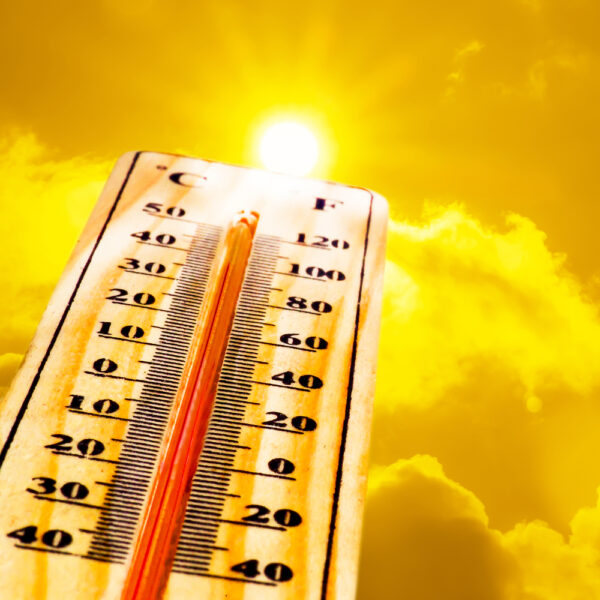
For the past three days, from Monday through Wednesday (July 3-5), global temperatures have either broken or matched records for the hottest day on Earth since at least 1979, according to the University of Maine’s Climate Reanalyzer, a tool that compiles data and models to measure the global atmosphere. Monday’s average worldwide temperature climbed to 62.6 degrees Fahrenheit (17 degrees Celsius), while Tuesday (July 4) and Wednesday (July 5) both hit 62.9 F (17.2 C).
While these temperatures may not seem particularly high, they represent the global average, which combines measurements from both the Northern Hemisphere and the Southern Hemisphere, where it is currently winter. The three-day hot streak was likely fueled by climate change, experts say, as well as the arrival of El Niño, a climate pattern characterized by warm sea-surface temperatures around the equator toward the Pacific coast of South America. El Niño events can change atmospheric conditions enough to boost heat waves around the world, research shows.
“It’s helpful to remember that the Pacific Ocean covers almost half the planet,” said Kim Cobb, a climate scientist at the Georgia Institute of Technology, told Live Science. During an El Niño event, “you’re talking about a very large portion of the planet that is … pushing temperatures up on the global average.”
“Writer Fuel” is a series of cool real-world stories that might inspire your little writer heart. Check out our Writer Fuel page on the LimFic blog for more inspiration.
