
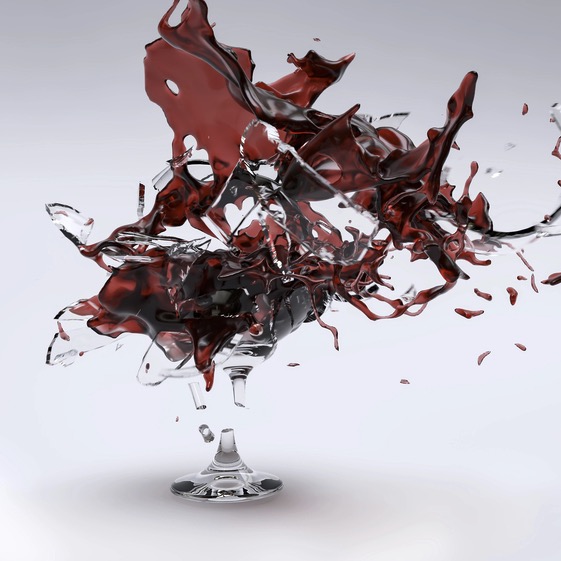
A dropped vase, a crushed sugar cube and an exploding bubble all have something in common: They break apart in similar ways, a new mathematical equation reveals.
A French scientist recently discovered the mathematical equation, which describes the size distribution of fragments that form when something shatters. The equation applies to a variety of materials, including solids, liquids and gas bubbles, according to a new study, published Nov. 26 in the journal Physical Review Letters.
Though cracks spread through an object in often unpredictable ways, research has shown that the size distribution of the resulting fragments seems to be consistent, no matter what they’re made of — you can always expect a certain ratio of larger fragments to smaller ones. Scientists suspected that this consistency pointed to something universal about the process of fragmenting.
“Writer Fuel” is a series of cool real-world stories that might inspire your little writer heart. Check out our Writer Fuel page on the LimFic blog for more inspiration.
