
by
Size: 5.25 x 8.00 in
Pages: 198

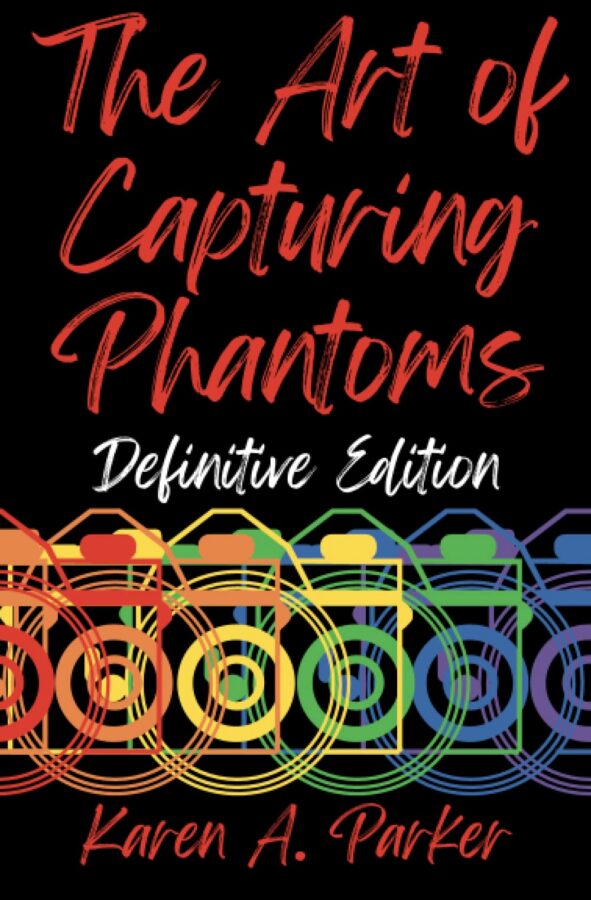
Eight colors. Eight flowers. One dazzling, chromatic collection.
A princess’s world collapses without warning. An archaeologist trapped underground contemplates death and converses with the sun. A pigeon wonders where hummingbirds go to sleep. A robot rebels against her creator.
The Art of Capturing Phantoms: Definitive Edition contains an eclectic range of stories from speculative to sci-fi, humorous to haunting, hundreds to thousands of words long. In their remastered and annotated first collection, Karen A. Parker challenges genre conventions and proves their mastery of short-form storytelling.
Publisher: Independently Published
Cover Artists:
Genres:
Languages Available: English
Languages Available: English
Nick Rees Gardner on Independent Book Review wrote:The Art of Capturing Phantoms: Definitive Edition is a short story collection by Karen A. Parker. A gifted young girl's world threatens to shatter as doubt creeps into it, leading her to seek help from her five loyal knights. A professor of magic contemplates the usefulness of their after-work hours when a student seeking help gives them a new perspective on things. A podcast host interviews an up-and-coming local entrepreneur, only for things to go south when the interviewee reveals he is a vampire. A woman debates whether or not she should venture into the dangerous woods to rescue her lost husband. A prince would rather die - or become a slave to a former assassin who kills for fun - than partake in an arranged marriage. A daughter sees her mother in a new light after her estranged father makes an unexpected appearance.
Karen A. Parker touches on a wide range of genres to tell a diverse collection of stories, each more unpredictable than the last. The Art of Capturing Phantoms includes tales from speculative fiction to fantasy, sci-fi, and everything in between. Parker has a unique storytelling style that almost feels like a deconstruction of several genres, and it gives the narrative a welcoming breath of fresh air that readers are bound to love. It is impressive how much information they pack into such a short space without wasting a single word. I thoroughly enjoyed this anthology and can't recommend it enough.
A collection of experimental flash fiction that lyrically explores the intersections between real and imagined worlds
The sketches, flash fictions, and anecdotes in Karen A. Parker’s The Art of Capturing Phantoms are an exploration into the formal limits of storytelling and imagination. Each story ranges from about 200 to 2000 words in length and defies conventions of genre and form to explore the relationships people have with each other and their surroundings.
In one story, a skeleton speaks with a mermaid who collects anchors from the ocean in order to gain the blessing of flight. And in a more realist depiction, the piece, “A Cardboard Box,” explores the narrator’s homelessness through the lens of a cardboard box. Each world is constructed carefully and revealed subtly enough for the reader to feel like they’d been there all along. Each experiment is complex, intricate, intriguing.
Worldbuilding is obviously Parker’s forte. In a single page, the eponymous story sets up a world where ghosts roam freely in a park. Other stories build a kingdom in a single sentence or reveal the fraught future of a relationship in a line. Often Parker’s economy of language and beautiful prose succeeds brilliantly.
Tight parameters are where Parker shines most, and they know it. In the footnotes that follow each story, Parker discusses their creative process. Often the prose pieces, all but one of which previously appeared on Parker’s blog, were products of a daily writing challenge, inspired by prompts found on the internet. A good example is the final story of the collection in which the reader is told through footnotes that Parker was tasked with writing an Alien character with a mask as a prop. Another impressive example of a more formal prompt comes from “ABC Fortunetelling,” an abecedarian form in which each consecutive sentence must begin with a consecutive letter of the alphabet. At the end of this story, the footnotes tell the reader how difficult this constraint was to follow and posits how nearly impossible it would be to go on creating while adhering to the form.
While the constraints and prompts that inspired most of these pieces are impressively adhered to, they sometimes get in the way of the storytelling. In the abecedarian piece previously mentioned, the line: “Xenophobic witch-haters–every one of them,” is included because, due to the constraints, but it sticks out as forced in the context of the story. Time is another constraint that gets in the way of some pieces. While many of the flash fictions in this collection read like complete thoughts, some pieces feel more like concept sketches, not fully fleshed out.
While some stories may fall short, the footnotes elevate the book as a whole into something more than a collection of short fiction, as it bleeds into genres of autofiction or memoir. In the footnotes, the reader is told how certain real life incidents, like “crying on my fifth birthday for no discernible reason that I can remember” inspired a story. In another note, Parker tells the reader “you have to grow into your emotions.” By including the footnotes as well as the Foreword and Preface, The Art of Capturing Phantoms becomes an account of the author’s journey. It explores how the writer feels about their art and how they’ve grown through experimentation and reflection into a more successful storyteller. The uncaged inventiveness and lyrical prose proves that Karen A. Parker is a promising rising writer.